

Buy now, pay later with Klarna
THE CLOTH · Nº 03 OF 04
Virgin wool,
in two houses.
The only cloth at Murmells made as two cloths at once — Biella for the woolen, Huddersfield for the worsted — and the only one, too, that lives divided.

PURE VIRGIN WOOL · 360 g/m² · ITALIAN PIEDMONT
01 — THE CLOTH
The technical sheet — as it leaves the mill, before the first stitch.
CLOTH WEIGHT
06
patterns
Six cloths from a single fibre. The only cloth in the house that does not settle for plain weave — there is the Piedmont herringbone and the Yorkshire cheviot, as the cut asks. The Italian woolen and the English worsted live side by side in the same editions.
FIBRE
Pure virgin wool
Shorn from the animal. No recourse to reclaimed fibre or shoddy.
FIBRE ORIGIN
Dual — Italy + England
The only cloth in the house worked across two countries.
ITALIAN HOUSE
Biella, Italy
The woolen — carded.
ENGLISH HOUSE
Huddersfield, England
The worsted — houndstooth, herringbone, cheviot, Glen.
WEIGHT
240 — 360 g/m²
By weave. Worsted lighter, woolen heavier.
FINENESS
Between 17 and 22 microns
Fine wool. Under 19 microns is considered Super 100s and above.
PATTERNS
Six — plain, herringbone, houndstooth, Glen, tartan, cheviot
The open catalogue of this house.
FINISH
Steam-decatised
Lightly raised. With even nap.
02 — TWO HOUSES, ONE FIBRE
Biella & Huddersfield
The fibre is the same. What changes is the hand: Piedmont cards it and lets it bloom; Yorkshire combs it and draws it taut.
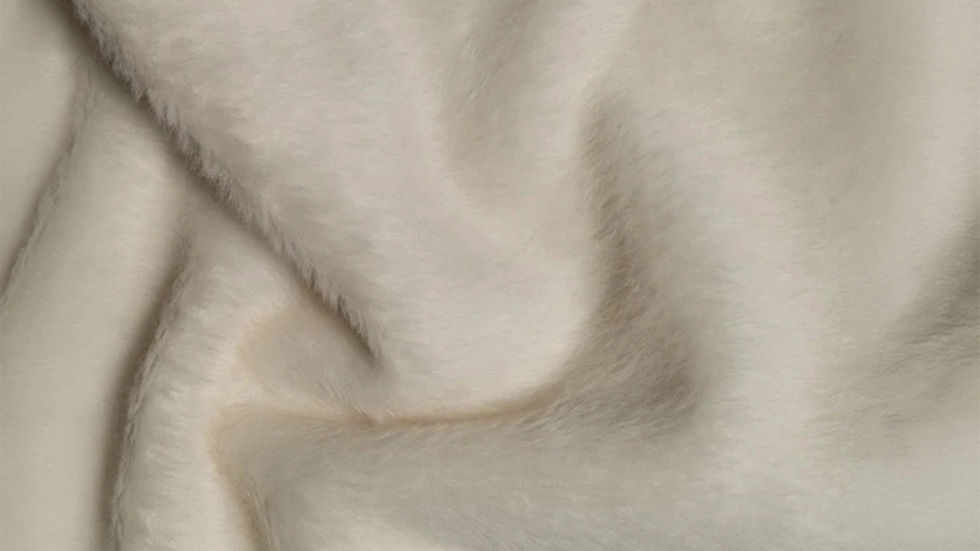
Biella, the woolen.
The Piedmontese Alps, valleys of soft water. Its historic mills work the woolen system — the fibre blooms, presses on itself, and leaves the loom as a cloth with body, nap, and a warm fall.
MILL
SYSTEM
Piedmont, Italy
Carded (woolen)
WEAVES
PATTERNS
Plain, melange
Plain

Huddersfield, the worsted.
The Pennines, valleys of soft water. Its historic mills comb the wool in parallel — the fibre tensions, aligns, and leaves the loom as a firm, flat cloth, able to hold pattern with a clean hand.
MILL
SYSTEM
Huddersfield, England
Combed (Worsted)
WEAVES
PATTERNS
Plain, twills
Houndstooth, herringbone, tartan, cheviot
03 — ABOUT THIS FIBRE
The word virgin — in the textile world it is no flourish — is a guarantee. Wool taken directly from the animal for the first time, never processed, recycled, or blended before.
Two traditions have raised it to its most exacting form: Piedmont and the Yorkshire of Huddersfield. They share an origin — fine wools, merino for the most part — and a historic asset rarely named: water. That of the Biellese valleys (Sessera, Strona, Cervo) and that of the Pennine valleys (Colne, Holme) is soft, low in calcium and magnesium — it allows the fibre to be scoured and dyed without mineral deposit, preserving the wool's natural lustre.
From there the craft divides. Piedmont cards it and lets it bloom. Huddersfield combs it and draws it taut.
Here the fibre is not the difference. The waters of the valleys where it is worked are.
Virgin wool regulates body temperature in both directions — insulating against winter cold, keeping its breathability through transitional months. It absorbs up to 30% of its weight in moisture without feeling wet. It is naturally flame-retardant, antibacterial, and elastic up to 30% of its length without deforming.
— Atelier notes · Extremadura, Spain
04 — THE LIBRARY
Six patterns, one fibre.
The only cloths in the house that bear pattern. They live alongside the plain woolen and the dry geometry of the worsted — each reads as its own piece.

PATTERN · 01
Plain weave
Plain weave

PATTERN · 02
Herringbone
Herringbone

PATTERN · 03
Houndstooth
Houndstooth

PATTERN · 04
Glen check
Glen check

PATTERN · 05
Tartan
Tartán

PATTERN· 06
Cheviot tweed
Cheviot tweed

06 — ROLLS OF VIRGIN WOOL IN THE ATELIER
Four things a virgin wool garment does.
It carries lightly to the hand — the property you'll notice in the first season of wear.
PURE VIRGIN WOOL · 360 g/m² · ITALIAN PIEDMONT
Nº 01
Warmth
Sheep's wool is the mother of warm cloth. The worsted resists wind.
Nº 02
Structure
The Huddersfield worsted draws the fibre taut and carries the line — the lapel opens, the hem falls plumb.
Nº 03
Pattern
The only cloth in the house that wears pattern. Herringbone, the Glen, and tartan are born here.
Nº 04
Memory
The fibre recovers its form at rest. A night on the hanger is enough for the next day to return.
LIST SUBSCRIPTION · THE JOURNAL
Letters written from the atelier, notices of new pieces in the catalogue, and word of upcoming Trunk Shows or events. One letter every few weeks. Nothing more.